What To Know About Exterior Wood Stain | The Family Handyman
Every editorial production is independently selected, though we may exist compensated or receive an chapter commission if you buy something through our links. Ratings and prices are accurate and items are in stock as of fourth dimension of publication.
Tired of maintaining an outdoor wood finish that peels? Exterior wood stain provides the same protection without the headaches.
Imagine you've just finished your deck with a traditional woods sealant. The surface is glossy and waterproof, and the wood grain is beautifully visible. Fast forrard a yr or two. Seasonal precipitation and sunshine have left that one time-beautiful finish croaky and peeling. At present you're doomed to hours of stripping, sanding and refinishing.
Wonder if there's a better way? Yes! Exterior wood stain.
What is Exterior Woods Stain?
Stains, unlike film-forming finishes like paint and sealants, soak into a forest surface and impart colour without forming a layer that tin crack and skin. While stains may not be as article of clothing-resistant as other outside woods finishes, they're unique in their ease of application and relatively trouble-gratis maintenance.
Traditionally, exterior forest stains are composed of an oil or water base, solvents and the all-important pigments that provide color and protect the woods from UV rays.
Types of Outside Wood Stain
Oil-Based Woods Stain
Oil-based stains have been used on decks and other outdoor structures for decades. These stains soak into wood finer and dry slowly, making it easy to create an fifty-fifty, professional end. Oil-based stains final a long time if applied correctly, and maintenance is as unproblematic as reapplying the product. They're also more often than not the nigh economic option.
One drawbacks of oil-based stains: They contain volatile organic compounds (VOCs) that evaporate into the air and tin be potentially harmful to the environment and people. That's why it's best to use them in a well-ventilated area (outdoors is perfect), then follow the manufacturer safety recommendations on the production container. As long as ventilation is sufficient, a respirator probably won't be necessary; I've never applied a stain where the manufacturer recommended one.
Farther, oil-based stains can concenter mildew over time, particularly if they're applied too thickly or in a oftentimes damp surround.
Water-Based Wood Stain
Water-based stains are a comparatively new technology, and they offering some specific advantages. Some water-based product manufacturers claim their stains are more than resistant to UV rays than their oil-based counterparts, and therefore final longer without maintenance. Still, well-nigh water-based stains I've used in exterior applications don't last as long equally oil-based products.
Water-based stains will not attract whatsoever microorganisms, and some even comprise zinc for extra mildew and rot resistance. Application of h2o-based forest stains is safe (no VOCs) and cleanup requires naught more than than soap and h2o.
Yet, applying h2o-based exterior wood stain is more than complex than exterior oil-based wood stain. Water-based products practice not soak as securely into wood and dry more quickly, so awarding must exist done advisedly to ensure an even stop.
Hybrid Wood Stain
Blends of oil- and water-based forest stains are becoming more common. Hybrid stains incorporate the durability and low VOCs of the h2o-based component along with the superior visual appeal and ease of application seen in oil-based products.
Choosing the Right Exterior Forest Stain for Your Projection
There's no one wood stain that'due south right for every project. The production you cull volition depend on the projection, your experience and your personal preferences. When choosing an exterior wood stain:
- Consider how much sunday the woods volition receive. Recall that h2o-based products offer the all-time UV resistance.
- Note the type of forest you lot're finishing. Softwoods like pine and cedar are highly absorbent, so quick-drying water-based stains can look blotchy, especially if you're a less experienced DIYer.
- Consider climate as well. Warm, humid weather makes your project more susceptible to rot and mildew, particularly if you utilize an oil-based product.
- Test the product before applying information technology to your entire deck, fence or lawn article of furniture set.
Staining Tools
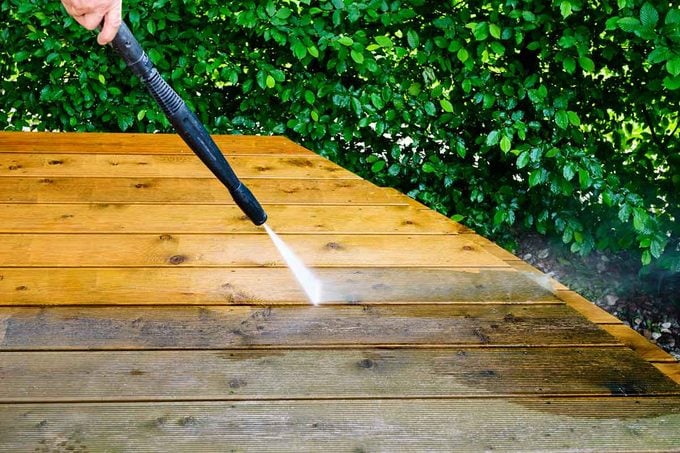
It's vital to prepare any wood surface before staining. Gather all the tools you'll need for prep and application:
Pressure Washer: You can probably become abroad without one for many projects, but pressure washing as a offset step can significantly reduce the fourth dimension yous spend sanding. A pressure washer is especially useful removing an old finish.
Ability Sander: A hand-held random orbit sander will work for most projects, although you may want to invest in or rent a walk-behind unit if yous're finishing a big deck or veranda. Experts and finish manufacturers agree that 60-grit sandpaper maximizes the absorbency of the surface and immovability of the finish.
Applicators: The awarding method depends on the size of your project and the stain you've called. Always cheque the stain manufacturer's recommendations. Rollers cover large areas like a deck more efficiently than brushes. Be certain to use a constructed-cobweb roller if yous're applying a h2o-based acrylic stain. Sprayers, in various forms and prices, can be purchased or rented for efficient and uniform application of sprayer-compatible stains.
Maintaining Exterior Wood Stain
One of the greatest advantages of stains over moving-picture show-forming finishes is the easy maintenance. Depending on wear and exposure, oil-based and water-based stains need reapplication every few years. This may seem similar a lot, but stains are so like shooting fish in a barrel to reapply compared to moving picture-forming finishes that the chore of sprucing them up is often a cakewalk.
Because stains simply wearable downward instead of peeling, a simple wash is frequently enough preparation earlier reapplication with a brush, roller or rag.
Film-forming finishes, included stain and sealer hybrid products, need to be stripped away with a sander when they start looking ratty, then reapplied. Fifty-fifty with stains, after several repeated reapplications you'll become the best results by sanding the surface before applying a fresh coat.
Most outdoor woodworking enthusiasts I know, myself included, don't bother with sealers on top of stains or with stain-sealer combination products due to the increased difficulty of maintenance. Outdoor woodwork is inherently rougher and less refined that its indoor counterparts. That's why a unproblematic application of h2o or oil-based stain is oft more than than plenty to get it looking expert.
Common Wood Staining Pitfalls to Avoid
- Using water-based stain on highly absorbent forest similar cedar or pino, creating a blotchy advent.
- Rushed application of stain, particularly water-based products, leading to visible brush strokes and blotches.
- Neglecting to remove the old finish and sand the surface thoroughly earlier applying stain.
Outside wood stain may non make your deck, contend or lawn piece of furniture wait like the lustrous deck of a luxury yacht. But for many, information technology's the all-time residual between protection from the elements, a beautiful appearance and trouble-gratis maintenance.
goodmansainigh1947.blogspot.com
Source: https://www.familyhandyman.com/article/about-exterior-wood-stain/
0 Response to "What To Know About Exterior Wood Stain | The Family Handyman"
Post a Comment